

Are you dreaming of a stunning bathroom transformation but feeling overwhelmed by where to start? Have you been scrolling through Pinterest, saving gorgeous bathroom ideas, yet wondering how to actually make them happen in your Brighton home? Perhaps you're asking yourself whether bathroom remodelling is really worth the investment, or maybe you're curious about the construction of bathroom spaces from scratch?
You're definitely not alone. Brighton homeowners face unique challenges when it comes to bathroom renovations. From heritage building considerations to maximising smaller spaces in period properties, there's plenty to think about. The good news? A well-planned bathroom build can add serious value to your home while creating a space you'll genuinely love using every single day.
In this comprehensive guide, we'll walk you through everything you need to know about bathroom home improvement in Brighton. You'll discover the essential bathroom renovation stages, learn which tasks you can tackle yourself, and understand when it's time to call in the professionals. Whether you're planning a complete gut job or a simple refresh, we've got you covered with practical, actionable advice tailored specifically for Brighton coastal living.
Planning Your Bathroom Remodelling in Brighton
Before you pick up a sledgehammer or start choosing tiles, proper planning is absolutely essential. This stage might feel less exciting than browsing fixture catalogues, but trust us—it'll save you headaches (and money) down the track.
Assessing Your Current Bathroom Space
Start by taking a good, honest look at what you're working with. Measure everything carefully and note the position of existing plumbing, electrical outlets, and windows. Consider what's working in your current layout and what's driving you absolutely bonkers. Is it the lack of storage? Poor lighting? A shower that never quite gets hot enough?
Setting a Realistic Budget for Bathroom Home Improvement
Here's where things get real. A mid-range bathroom renovation typically costs between $15,000 and $30,000, though this can vary significantly depending on your choices. Set aside at least 15% extra for unexpected surprises—because there are always surprises when you start opening up walls.
Understanding Brighton Building Regulations and Permits
Brighton homes often come with specific planning requirements, particularly if you're in a heritage overlay zone. Check with your local council before making any structural changes. You'll likely need permits for plumbing and electrical work, and waterproofing must meet Australian standards. Getting this sorted early prevents costly delays later.
How to Build a Bathroom: Essential Design Considerations
Understanding how to build a bathroom means thinking beyond just aesthetics. The best bathroom designs balance form and function beautifully.
Choosing a Layout That Works for Your Space
Your layout determines everything else. Consider traffic flow—can two people use the space comfortably? Position the toilet away from the door for privacy. If space is tight, a walk-in shower takes up less room than a bathtub. Corner vanities can maximise floor space in smaller bathrooms.
Selecting Fixtures, Fittings, and Finishes
This is the fun part! When selecting fixtures, think about longevity as well as style. Chrome tapware remains classic, while matte black suits contemporary spaces. For tiles, larger formats create an illusion of space, and textured tiles add visual interest without overwhelming smaller rooms. Don't forget practical considerations like slip resistance and ease of cleaning.
Maximising Natural Light and Ventilation
Brighton's coastal location means humidity is a real concern. Proper ventilation prevents mould growth and protects your investment. Consider skylights if adding windows isn't possible. Frosted glass offers privacy while still letting light flood in, creating that bright, airy feel we all love.
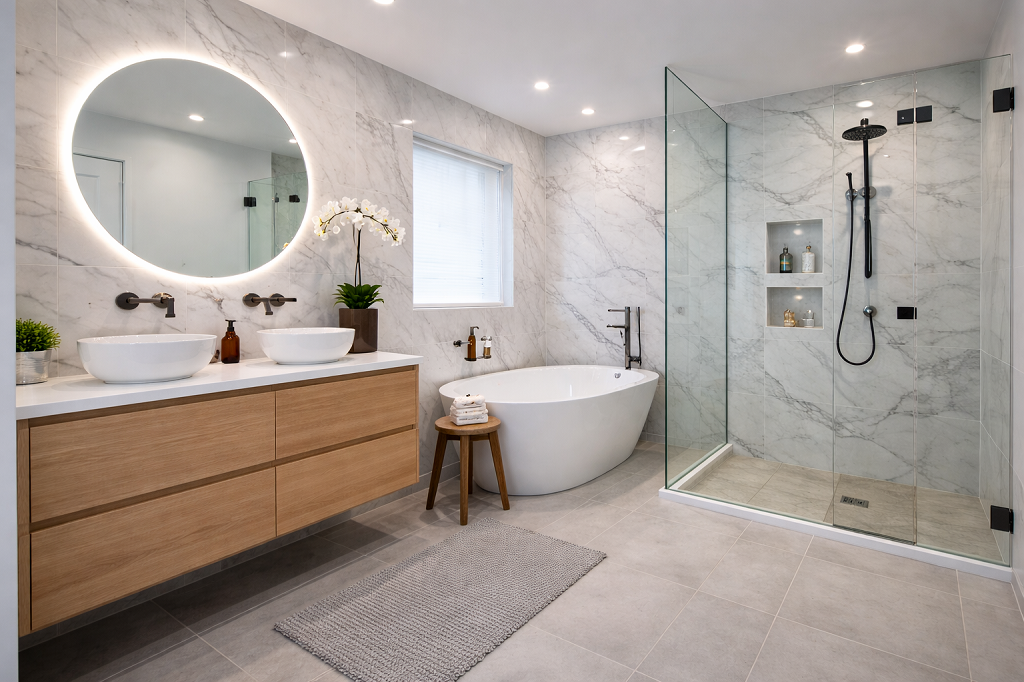
Bathroom Renovation Stages: A Complete Timeline
Understanding the bathroom renovation stages helps you plan realistically. Most complete renovations take between two and four weeks, depending on complexity.
Stage One: Demolition and Stripping Out
First things first—everything old needs to come out. This includes fixtures, tiles, sometimes even wall linings. It's messy, noisy work that typically takes one to two days. Make sure you've arranged alternative bathroom facilities before this begins!
Stage Two: Plumbing and Electrical Rough-In
Once the space is stripped back, your plumber and electrician can relocate pipes and wires if needed. This is the time to move drain positions or add extra power points. These trades need to complete their rough-in work before any construction continues.
Stage Three: Waterproofing and Construction of Bathroom Framework
The construction of bathroom framework involves installing wall linings and ensuring everything is perfectly level. Waterproofing is non-negotiable—it must be applied correctly and allowed to cure fully. Cutting corners here leads to expensive problems later, so make sure your tradesperson provides a waterproofing certificate.
Stage Four: Tiling and Wall Finishes
Tiling requires precision and patience. A skilled tiler makes all the difference between a professional finish and a DIY disaster. Allow proper curing time for grout before moving to the next stage—typically 24 to 48 hours.
Stage Five: Installing a New Bathroom – Fixtures and Fittings
Now comes the exciting part—installing a new bathroom finally starts looking like, well, a bathroom! Your vanity, toilet, shower screen, tapware, and accessories all go in during this stage. Everything gets connected and tested for leaks.
Stage Six: Final Touches and Quality Checks
The finishing touches matter. Silicone sealing around fixtures, final paint touch-ups, and installing mirrors and accessories complete the transformation. Do a thorough quality check before signing off—run every tap, flush the toilet multiple times, and check all drainage.
Toilet Construction Details: What You Need to Know
Getting the toilet construction details right is more important than you might think. Poor positioning or incorrect installation leads to ongoing problems.
Positioning and Plumbing Requirements
Australian standards require specific clearances around toilets—at least 450mm from the centreline to any obstruction on either side. The toilet needs access to both water supply and waste drainage, typically requiring a 100mm drain pipe. Moving toilet positions significantly increases costs due to the complexity involved.
Choosing the Right Toilet Style for Your Bathroom Build
Wall-hung toilets create a sleek, modern look and make floor cleaning easier—perfect for smaller spaces. Back-to-wall toilets offer a streamlined appearance with easier installation. Standard close-coupled toilets remain popular and cost-effective. Consider water efficiency ratings too; a 4-star WELS-rated toilet saves significant water over time.


