

Have you ever wondered why Japanese people consistently rank among the healthiest and longest-living populations on the planet? What if the secret to better health wasn't hiding in a supplement bottle, but sitting right there on your favourite sushi platter? And could regular visits to your local Japanese restaurant actually transform your wellbeing?
Japanese cuisine has absolutely taken Australia by storm over recent years, and it's not just because the food tastes incredible. From bustling Sydney eateries to laid-back Perth dining spots, Aussies are embracing Japanese eating like never before. There's something special about this cuisine that goes far beyond flavour—it's genuinely good for you. Whether you're grabbing a quick bento box for lunch or enjoying a theatrical teppanyaki experience with mates, you're making a choice that your body will thank you for.
In this article, we'll explore why healthy Japanese food deserves a regular spot in your meal rotation. We'll break down the nutritional benefits of sushi, examine whether sashimi is healthy, and tackle common concerns like sodium levels. Plus, we'll share tips for making Japanese dining both budget-friendly and beneficial for your overall wellbeing. Ready to discover how your next restaurant visit could boost your health? Let's get stuck into it.
What Makes Japanese Food One of the Healthiest Cuisines in the World?
The Traditional Japanese Eating Philosophy
Japanese eating isn't just about what's on the plate—it's a whole mindset. The traditional approach follows a principle called "hara hachi bu," which means eating until you're 80% full. This simple habit naturally prevents overeating and helps maintain a healthy weight without feeling deprived.
Balance sits at the heart of Japanese cuisine. A typical meal includes multiple small dishes rather than one massive portion. This variety ensures you're getting a wide range of nutrients while keeping portion sizes sensible. It's clever eating without the complicated calorie counting.
Fresh Ingredients and Minimal Processing
Healthy foods in Japan rely heavily on fresh, seasonal ingredients with minimal processing. Fish, vegetables, rice, and fermented foods form the backbone of most meals. You won't find loads of artificial additives or heavy sauces drowning out the natural flavours.
This focus on freshness means you're consuming food in its most nutritious state. Vegetables retain their vitamins, fish keeps its omega-3 content, and the overall meal delivers genuine nourishment rather than empty calories.
Japanese Foods That Heal: Nature's Medicine on a Plate
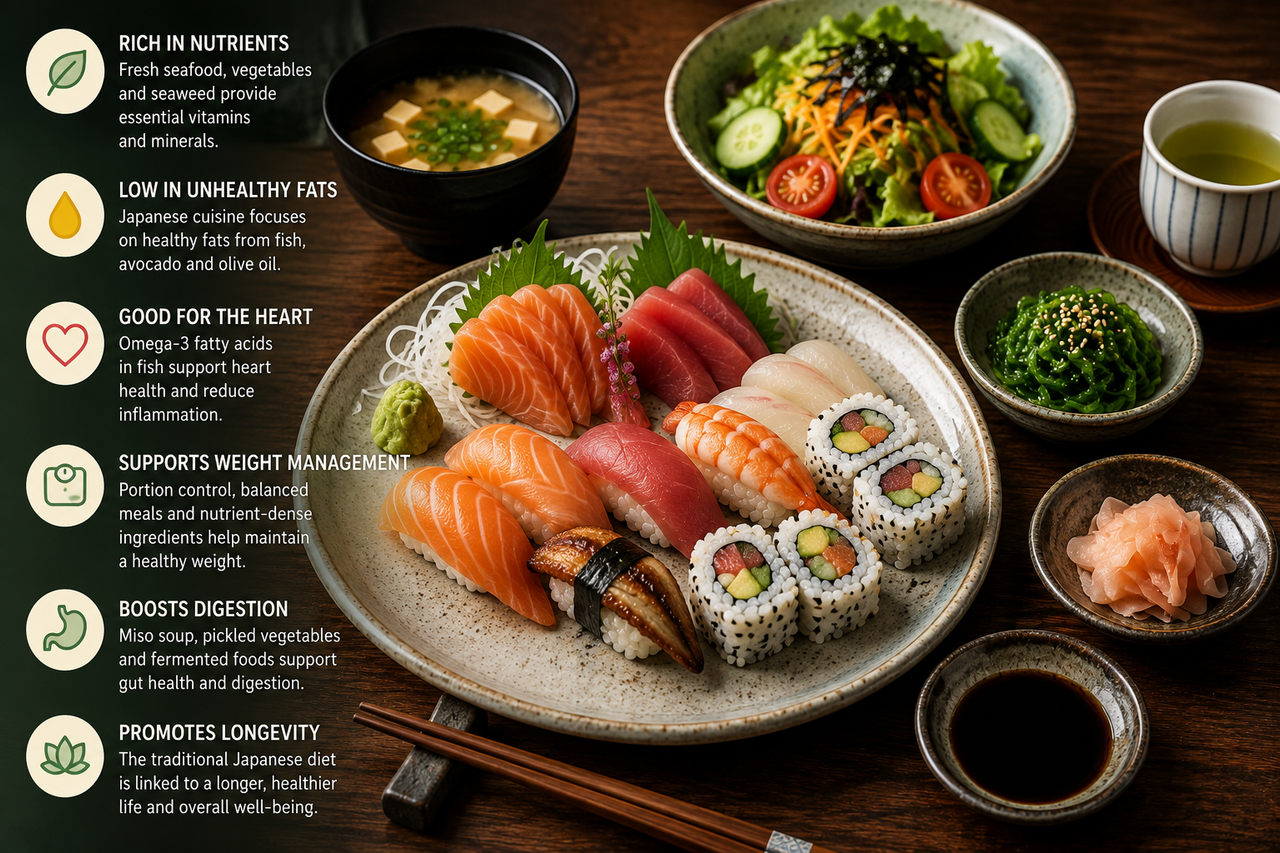
Japanese foods that heal have been recognised for centuries. Miso soup contains probiotics that support gut health. Seaweed delivers iodine and antioxidants. Green tea, often served with meals, offers metabolism-boosting properties.
These healing elements aren't add-ons—they're woven into everyday dining. When you eat at a Japanese restaurant, you're essentially enjoying functional food that actively supports your health. It's like having your medicine taste absolutely delicious.
Is Sushi Healthy for You? Breaking Down the Nutritional Facts
Is Sushi Good for Weight Loss?
So, is sushi healthy for weight loss? The short answer is yes, when you choose wisely. Sushi typically contains lean protein from fish, easily digestible rice, and nutrient-dense seaweed. A standard salmon roll clocks in at around 300 calories—far less than most takeaway options.
Is sushi good for weight loss goals specifically? Absolutely. The protein content keeps you satisfied longer, reducing the urge to snack. Just watch those tempura rolls and creamy mayo-based options, which can bump up the calorie count significantly.
Is Sushi Fattening or a Smart Choice?
Is sushi fattening? Not inherently. Plain sashimi and simple maki rolls are remarkably lean. Is sushi healthy for u when you're watching your waistline? It certainly can be one of the smartest choices on any restaurant menu.
The key lies in selection. Stick to nigiri, sashimi, or rolls with fresh vegetables and you're onto a winner. Save the deep-fried options for occasional treats rather than regular orders.
Sushi Benefits for Skin: The Omega-3 Advantage
Here's something brilliant—sushi benefits for skin are genuinely impressive. The omega-3 fatty acids found in salmon, mackerel, and tuna support skin elasticity and hydration. These healthy fats help reduce inflammation, potentially improving conditions like acne and eczema.
Regular consumption of omega-3-rich fish promotes that healthy glow from the inside out. It's basically a beauty treatment you can eat, and it tastes far better than any supplement.
Sushi Energy: Why It's Perfect for Sustained Fuel
Need steady energy throughout the day? Sushi energy comes from the perfect combination of complex carbohydrates and protein. The rice provides immediate fuel while the fish protein ensures a slow, sustained release.
Unlike sugary snacks that spike then crash, sushi keeps your energy levels stable. It's ideal for busy workdays when you need to stay sharp without the afternoon slump.
Sushi Post-Workout: The Ideal Recovery Meal?
Is sushi post-workout a good choice? Personal trainers increasingly recommend it. The protein supports muscle repair while the carbohydrates replenish glycogen stores. It's essentially everything your body needs after exercise, wrapped in a tasty package.
Plus, it's easy to digest, meaning your body can get straight to recovery work without struggling through a heavy meal.
Is Sashimi Healthy? The Power of Pure Protein
Sashimi vs Sushi: Which is Better for Your Health Goals?
Is sashimi healthy? Without question. Sashimi is essentially pure, high-quality protein without the rice component. For those monitoring carbohydrate intake, it's the perfect option.
When comparing sashimi vs sushi, both offer excellent nutrition. Sashimi edges ahead for lower calorie counts and higher protein-per-bite ratios. However, sushi provides more sustained energy from those carbohydrates. Your choice depends on your specific health goals.
Is Japanese Food High in Sodium? Navigating the Salt Question
Tips for Enjoying Japanese Food with Lower Sodium Intake
Is Japanese food high in sodium? This concern has some merit. Soy sauce, miso, and pickled items do contain significant salt. However, you've got plenty of control over your sodium intake when dining out.
Request low-sodium soy sauce—most restaurants stock it. Use soy sauce sparingly by dipping lightly rather than dunking. Choose steamed dishes over those with heavy sauces. Ask for dressings and sauces on the side. These simple swaps let you enjoy the flavours while keeping sodium in check.
Japanese Restaurant Calories: What to Expect When Dining Out
Healthy Japanese Food Options to Order
Understanding Japanese restaurant calories helps you make informed choices. Edamame, miso soup, sashimi, and grilled fish are all excellent low-calorie options packed with nutrients.
Vegetable-based rolls, seaweed salads, and steamed dumplings also make smart selections. These dishes deliver maximum nutrition without excessive calories.
Dishes to Enjoy in Moderation
Some items deserve the "occasional treat" label. Tempura, while delicious, adds significant calories through frying. Creamy rolls with mayo-based sauces and rice-heavy dishes can quickly increase your intake.
Enjoy these in moderation rather than avoiding them entirely. Balance is the Japanese way, after all.
The Teppanyaki Experience: Entertainment Meets Wellbeing
Why Teppanyaki is a Healthier Dining Choice
Teppanyaki cooking uses minimal oil on a flat iron grill, making it one of the healthier cooking methods around. Watching chefs prepare your meal means you know exactly what's going into your food—no hidden nasties.
The cooking style preserves nutrients in vegetables while creating delicious charred flavours. It's theatrical, social, and genuinely good for you.
Finding Quality Teppanyaki in Australia: From Sydney to Perth
Aussies are spoilt for choice when it comes to teppanyaki. Kobe Jones teppanyaki Sydney offers a premium experience in a stunning harbourside setting. Check out The Rocks teppanyaki reviews for firsthand accounts of the dining experience there. The Rocks teppanyaki photos online showcase the theatrical cooking style beautifully.
Heading south? Teppanyaki Brighton delivers quality Japanese cuisine in Melbourne's beachside suburb. Teppanyaki Narellan serves the southwestern Sydney community brilliantly. For Perth locals, searching for the best Japanese teppanyaki Perth reveals several excellent options.
Looking for value? Teppanyaki Scoopon deals pop up regularly, making quality Japanese dining more accessible. Cheap teppanyaki doesn't mean compromising on quality—many restaurants offer lunch specials and early-bird pricing. Wharf Teppanyaki is another popular choice for waterfront dining.
Healthy Foods in Japan vs Australian Japanese Restaurants
How Local Venues Maintain Authentic Health Benefits
Healthy restaurants in Tokyo set the benchmark, but Australian Japanese restaurants work hard to maintain authenticity. Quality venues source fresh seafood daily and follow traditional preparation methods.
Look for restaurants that emphasise freshness and traditional techniques. These establishments deliver the genuine health benefits that make Japanese cuisine so special.
Wellbeing Sushi: The Mental Health Benefits of Japanese Dining
Mindful Eating the Japanese Way
Wellbeing sushi extends beyond physical nutrition to mental health benefits. Japanese dining encourages mindfulness—paying attention to presentation, savouring each bite, and eating slowly.
This mindful approach reduces stress and improves digestion. It transforms eating from a rushed necessity into a peaceful ritual.
Social Connection and Dining Culture
Sharing plates and dining together strengthens social bonds. Japanese restaurants naturally encourage this communal experience, supporting mental wellbeing through connection.
How to Make Japanese Dining a Regular Part of Your Healthy Lifestyle
Budget-Friendly Tips for Eating Japanese More Often
Japanese dining needn't break the bank. Lunch specials often cost half the dinner price for similar portions. Takeaway bento boxes provide excellent value. Sharing plates with friends reduces individual costs while increasing variety.
What to Look for in a Quality Japanese Restaurant
Seek out restaurants with high turnover—fresh ingredients matter enormously. Check online reviews for consistency mentions. Look for chefs with genuine Japanese training or experience.
Your Path to Better Health Through Japanese Cuisine
Throughout this article, we've explored the remarkable health benefits hiding in Japanese cuisine. From the omega-3 powerhouse of sushi to the pure protein punch of sashimi, every dish offers genuine nutritional value. We've tackled common concerns about sodium and calories, showing how simple adjustments make Japanese dining even healthier.
The evidence is clear—making Japanese food a regular part of your diet supports weight management, skin health, sustained energy, and post-workout recovery. The traditional Japanese eating philosophy offers wisdom that modern nutrition science continues to validate. It's not just food; it's a proven path to better health.
So why not book a table at your local Japanese restaurant this week? Whether you're after sushi, sashimi, or a spectacular teppanyaki experience, you're making a choice your body will genuinely appreciate. Here's to good health, great food, and the joy of eating well. Your journey to better well-being might just start with a pair of chopsticks.


